Showing posts with label seoul. Show all posts

Saturday, July 3, 2010

Day 2 in Seoul - Shopping at Ilsan


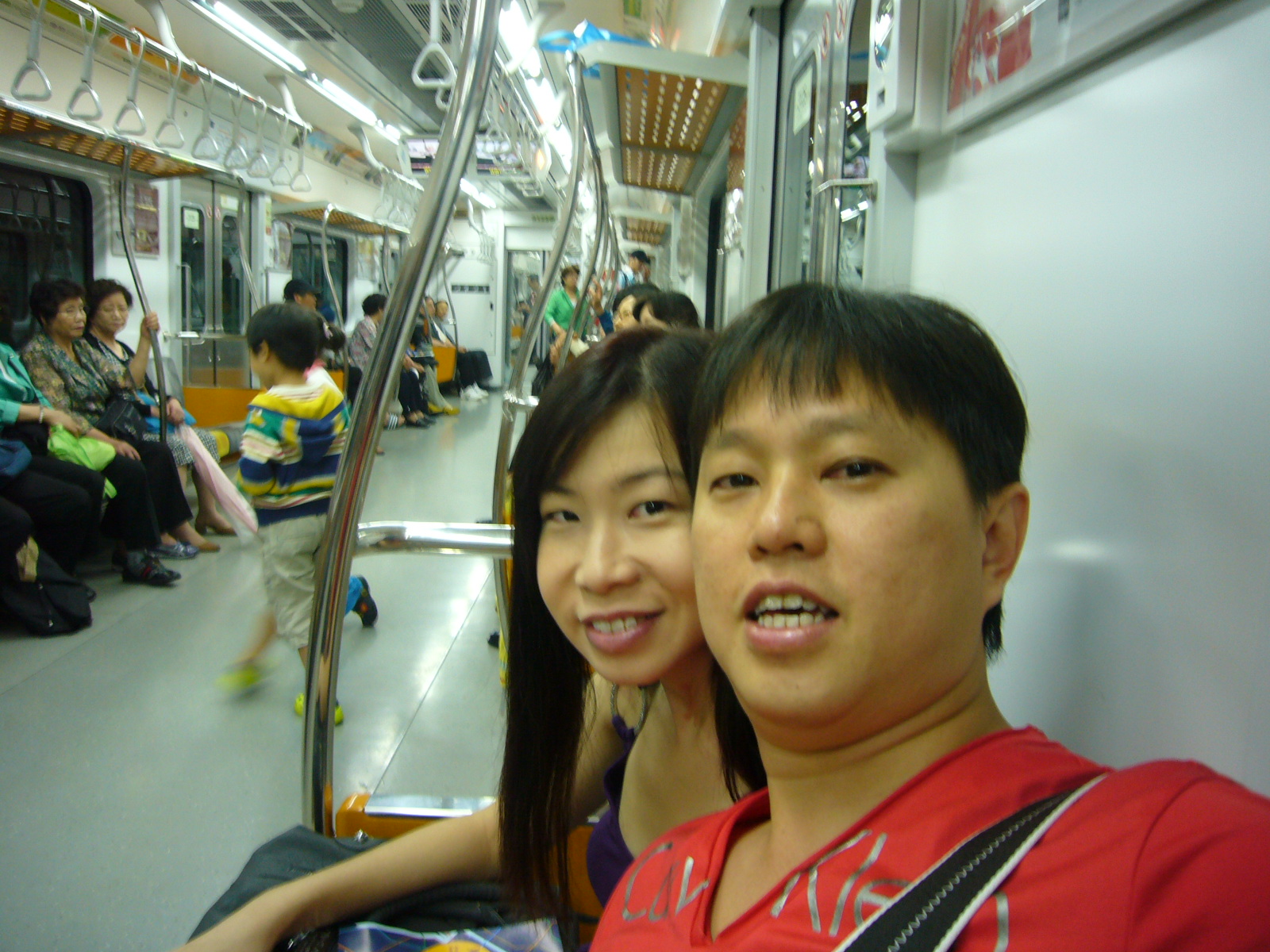
(Above) In the train on the way to Ilsan

On our second day, as it was raining cats and dogs, we changed our plan to go to Noryangjin market and instead took a trip to Ilsan, a district northwest of Seoul which is a more affluent upper middle class suburban area.We had read that prices of items there were cheaper with the same quality and variety than Seoul and decided to explore the city. We took the subway line 3 to get there dropping off at Jeongbalsan station.

(Above) At Jeongbalsan Station

Taking the subway is quite easy once you have your T-Money with you and have the subway map to guide you. There are English announcements to inform you which station is next or you can refer to the electronic display in the train. It is important to listen attentively to the announcements because sometimes, the train may not be proceeding onto the next station due to maintenance etc and you would need to transfer to another train on the same line. Also, look for the celing mounted lighted arrow displays to tell you which side of the train to alight from.

At Ilsan, most tourists would head for their lake park and the shopping belt but as it was still raining cats and dogs, we gave the former a miss and focused on the shopping belt. Luckily we brought our own umbrellas so do bring them along if you go to Seoul in June as they have this periods of rain in between.

Above)Rainy day in Ilsan


(Above)A relief from rain - indoor Shopping ahead!


(Above)Gayle's smile shows a contented shopper


(Above)Shops and more shops


(Above)Our lunch point - Konbul eatery at Ilsan

We interrupted our shopping and rested our legs with a good lunch at the popular Kongbul chain of eating house(above) offering pork bulgogi, bean sprouts simmered on the table in a big metal tray with spices and chilli(below).


(Above)Setting our stomachs on hunger mode!

Unable to speak Korean, we communicated with a very friendly waiter. Being very independent Singaporeans,we proceeded to mix and fry the ingredients over the heated metal tray and even poured some of our rice into it. When he saw he, he shrieked "Oh my god!" and stopped us. He said that it was his job to do the mixing,stirring and fryng and communicated through a mixture of 'broken' English and sign lanaguage that we were not suppose to mix our rice in.


(Above) The wrong(right portion with rice) and right(Left portion without rice) method


(Above) Our friendly waiter doing the cooking for us.

While the rice tasted good to us when it was mixed in, we realised that there was a reason as you want the rice to be just plain untouched so as to offset the spicy taste. A learning experience indeed and from then on, we let all the waiters/waitresses in the eateries we ate in later days to do the initial mixing and stirring and waiting for them to invite us to start eating.Another good thing is cold water is served free unlike in Singapore where water is charged.
We then proceeded with shopping till evening when we took a train back to Anguk where we walked around Insadong. As it was a cold and rainy day, we just could not resist heading back to our lunch spot the previous day to have boiling hot intestine ox blood rice soup for dinner.


(Above)Standard pickled side dishes - always very generous with servings and willing to give you repeatedly the minute you empty the side dish.


(Above) Seaweed soup to soothe your fired up spiced taste buds


(Above) Gayle enjoying her meal.


(Above) Our satisfied faces from a good meal


Above)Dinner - simmering hot Intestine ox blood soup on a cold rainy day! delicious!


(Above) Watching the World Cup match at Family Mart - a 24hrs convenience store is a free pastime of soccer mad koreans, even in the rain. We found it amazing how the image is projected so clearly on the glass window of the store.


(Above)Returning back to our room after a whole day out.


(Above)Having supper in our apartment- yummy Korean Blood sausages


(Above)Gayle doing the laundry


(Above)Gayle trying on one of her buys - a nice silky top

Saturday, February 27, 2010

DAY 4 in SEOUL – SHOPPING AT DONGDAEMUN, VISITING THE 63 BUILDING


Day 4 is where we will set aside time to look for those shopping buys which we had put aside the previous days so that we can check that the buys are good or that we have made a decision to buy to prevent impulsive shopping.


(Above) Fashion apparel at Dongdaemun

Also, it allows us to revisit those places that we may have missed or rushed through in the first few days here. So we will go back to Dongdaemun area in the 1st half of the day and then go to Insadong area near our serviced apartment which will make getting back easier, especially after a full day of walking and shopping.


(Above) Different levels of shopping experience, from malls to markets.

After breakfast at our serviced apartment, we will walk to Anguk Station and take a train to the next stop at Jongnosam(3)ga Station which will allow us to make a transfer from Line 3 to Line 1. Taking the Line 1 train from Jongnosam(3)ga Station, we will alight at the the 2nd stop at Dongdaemun Station. At Dongdaemun station, we will exit from exit 3 of Line 4 of the station and use the overhead pass to get to the shopping malls like Doosan Tower and Migliore.

We will probably start with Doosan Tower which by itself is a feat to accomplish in shopping with 2000 stores in its nine stories. We heard that popular Korean pop stars often perform on the outdoor stage in front of the building so one can keep a lookout for them.

For lunch, we can either go to one of the many restaurants and eateries within Doosan Tower or proceed out of the mall to some recommended eateries in the area. We will shop till about 3 to 4pm in the afternoon before heading off to the 63 Building for some more shopping and getting a bird eye’s view of Seoul central.


Formerly called the Daehan Life Insurance (DLI) 63 Building(above), it is now know better by the local people as the 63 Building. While the building officially has 63 stories, only 60 are above ground. The other 3 are underground. Still, it remains the tallest building in Northeast Asia. Besides being a tourist and architectural attraction, the building contains many different attractions and amusement. The building resembles a small city, containing a beauty salon, post office, and ATM machines. Various stores sell everything from books to clothes to flowers to stationary.

To get to 63 Building, we will take a line 4 train from Dongdaemun station and transfer at the next stop which is Jongnosam(3)ga Station. At this station, we will transfer to Line 5 which will see us alighting 8 stops away at Yeouido Station. This station is located on an island on the southern side of the han River in Seoul. at side of the island has been paved over for parking, although a small patch has been saved for a small nature preserve.

Yeouido forms Seoul's (and therefore Korea's) financial and economic center, housing the Korea Stock Exchange and the headquarters of numerous securities dealers, banks, and other financial institutions. The National Assembly building sits on the western side, where Korea's polititians boycott meetings called by the opposing party and engage in occasional fist fights once they actually do get together. The eastern side of the island is dominated by the the 63 Building which we are visiting. We will emerge from exit 5 of the station and take a 10 minutes walk / or the free shuttle bus to 63 Building.

At 63 Building, we will pay about 5000W each to take the elevator to the 60th storey or 63rd Floor Observation deck ( depends on whether you see the 3 stories that are underground as the starting point). From the Observation Platform at 264m above the sea level, and 249m above the ground level there is a feeling as if one is floating above the clouds, we will be rewarded with a panoramic view of Seoul and the surrounding area. On a clear day or night, one can see up to 50 km. (However, we are told that clouds or pollution may limit our visibility to a lot less on most days.)
There are floor to ceiling windows to lean your camera up against for photographs. Take some. Try walking out onto the glass floor if you are brave enough. There is also a wax museum, an art museum(Hello Kitty fans may want to visit the art exhibit with Hello Kitty theme there), an IMAX theatre for visitors but visiting all these will incur admission fees of up to 38000W per adult so it is a personal choice whether that money can be better spend on food or shopping. Admission starts at 10am and last admission is at 9.30pm for those who want to take the night view of Seoul.

After coming down, we will do some shopping at the many shop areas at the 63 Building, and if we can find time to also visit Yeouido Plaza, a huge paved area in the center of the island which could theoretically be used for a landing strip for airplanes, has been ripped up and turned into a park with grass and trees- definitely something Seoul has needed for a long time! The Han River side contains a bike path (continuing along the southern bank of the Han River), several riverside parks, and a large outdoor stage with weekly concerts during the summer. Many people go to the park area behind the National Assembly building where they operate radio controlled airplanes, helicopters, and cars. This is a good place to get some nice photo opportunities of the Han river and the Seoul skyline.


(Above) Samgak Kimbap. You can see the numbers 1,2,3 indicating how to open the packet.

Along the way, we will probably want to try a popular Korean snack that we often see on Korean drama series which is the samgak kimbap, (Korean sushi). There is a skill involved in removing the plastic wrapper and keeping the seaweed intact. However, we managed to get some tips on how to open the snack intact. On the wrapper, there are the three numbers. 1 2 3. Follow the numbers when removing the plastic wrap. Pull down the tab (1), until it wraps around and you're left with 2 and 3, the sides. Gently, tugging at the plastic only, remove one side, then the second side and then wrap the seaweed back into place.

For an early dinner, I will bring Gayle back to 63 Building to try out ‘sky-dining’ at the 63 Building’s '63 Buffet Pavilion' offers delicacies from all over the world. Its huge facility and top-quality food has named the restaurant as the best buffet-style restaurant in Korea, styled after a European garden. The cooking staff have won various international cooking competitions, and much of the food is prepared in an open-kitchen with a wide spread of Korean food, Chinese food, Japanese food, vegetables, salads, Galbi, roast beef, drinks etc to cater to all tastes. Dinner is at 57000W per person so it’s a nice splurge to have a romantic dinner with Gayle on top of Seoul and have a nice view during dinner. For more details on the 63 Buffet Pavilion, you can visit http://english.visitkorea.or.kr/enu/FO/FO_EN_6_4_4.jsp?cid=553150.

After dinner, we will take the subway back to our serviced apartment at Anguk station. We will transfer from Line 5 to Line 3 at Jongnosam(3)ga Station which will allow us to reach Anguk Station. We will unload our shopping at our apartment. If we are still energetic, we will probably do some more night shopping down the street at Insadong Gil. If not, we will have an early night and do some laundry since we have a washing machine in our apartment.

Sunday, February 14, 2010

Day 3 in Seoul - DMZ and Itaewon


(Above) The Demilitarized Zone separating North and South Korea.

DAY 3, we will have our breakfast at our serviced apartment’s dining area and wait for our tourist guide from Holiday Planners, a local agency in Seoul that organized local tours such as the Demilitarized Zone Tour that we are taking today. You can visit their website for other tours - http://www.theseoul-hotels.com/tours . The tour’s duration is about 5 hours and cost per person is SGD$73 or 61000W. No meals are included and we will probably pack some light food just in case we feel hungry as we plan to eat after the tour. The good thing is they pick you at your hotel and drop you off at the Itaewon shopping district.

A trip to South Korea is not complete without taking a tour to the border between North and South Korea, which remains one of the last icon of the Cold War between democracy and communism. Technically, both South Korea and North Korea are still ‘at war’ as there was no peace treaty signed to conclude the war. The tour will cover visits to the Bridge of Freedom, Imjin-Gak Park, Unification Village, Dora Observatory, station and the third tunnel.


(Above) Bridge of Freedom
The first stop is at the Bridge of Freedom which is still the only bridge crossing over the Imjin River, and most importantly, the only bridge connecting between South and North Korea. According to popular accounts, about 13,000 war captives released from the North crossed this bridge to the South crying ‘Hurrah for freedom’, which gave the bridge its name, "the Bridge of Freedom".


(Above) Unification Village

The second stop is at Imjin-Gak park which is located about 50 kilometers northwest of Seoul. The place is visited by locals every Lunar New Year’s Day where a joint memorial service is conducted to comfort the 10 million South Koreans separated from their families in North Korea.


From the Imjin-Gak Observatory(above), we will be able to get a view of North Korea. and visit the displays of actual jet aircraft and tanks from the Korean War at the Exhibition Hall. Imjin-Gak is located near the western end of the front line. The Kyung-Ui Railroad which was built to connect South and North Korea when completed, passes through Imjin-Gak Park. Therefore, it remains a symbol of both despair of separation and hopes for reconciliation.
From here, we move onto the Dora Observatory which is a 304 sq feet, 500 capacity observation platform situated on top of Dorasan or Mount Dora. The observatory looks across the Demilitarized Zone. As it is the nearest point to North Korea from South Korea, from the observatory,we can view North Korea including the North Korean propaganda village situated in the DMZ, a remnant of the old prosperity of the North, and can see as far as the city of Kaesong.
Our next stop would be at Dorasan Train Station which is located in Paju, is the northernmost train station of South Korea that connects South Korea and North Korea.This is a station with no trains.Unlike most stations, which are full of excitement and liveliness, Dora mountain station stands as a quiet monument that is filled with bitter silence. Visitors instead of passengers, visit this station, to feel the bitterness of a country divided. A famous photo opportunity there is to pose in front of the sign at the boarding gate which proclaims ‘Next destination: Pyeongyang’. Many South Koreans and tourists visit the station in the hope that one day, the North and South will be unified and trains will pass through the Dorasan Station from Seoul to Pyeongyang.
The final stop is at the 3rd Infiltration Tunnel which is located about 44 km or, less than an hour's drive, from Seoul. The third tunnel was discovered in October 1978. Almost identical in structure to Tunnel 2, the 1.635 kilometer-long tunnel, 1.95 meters high and 2.1 meters wide, penetrates 435 meters south of the Military Demarcation Line at a point only 4 kilometers south of the Truce Village of Panmunjom. The tunnel is a engineering marvel as it runs through bedrock 73m below the ground level and was constructed right under the noses of the South Koreans before it was discovered. The tunnel can allow the swift movement of one North Korean army division per hour, plus their weapons, so as to allow for a surprise attack on Seoul. This tunnel is also only 2 km from a key outpost defending the Munsan corridor leading to Seoul. After the tour ends which is about 5 hours later, it will probably be mid afternoon and we will then be dropped off by the tour guide at the Itaewon shopping area.

Itaewon is often described as the most exotic place in Seoul representing fusion of different cultures with a distinctive atmosphere. Many locals have a saying that ‘ You may not know Seoul but you should know Itaewon’ which says something about it’s reputation as a shopping and eating enclave.


(Above) Shopping street in Itaewon

Itaewon’s shopping area covers a 1.4 km length, stretching from the U.S. 8th Army Base eastwards to Hannam-dong and contains over 1,000 different stores. Over 2,400 shops are crowded onto Itaewon Street, of which over 600 offer fashion apparel, over 150 sell leather goods, over 100 are shoe stores, and more than 50 are suit retailers. Itaewon has been named one of the most popular places to shop for bags, fur coats, leather goods, shoes and suits. Leather goods, including handbags and fashion apparel, are very popular with tourists and locals. The area has a vibrant night life scene with many bars and nightclubs.


(Above) Itaewon street vendor
Many street vendors selling shirts, jackets, and caps from local brands to counterfeit brands also stay up late to cater to nocturnal shoppers. Clothing shops offer everything from hip hop styled T-shirts and pants to casual wear to formal suits. There are also shops specializing in bags for sale from suitcases like Samsonite to leather bags. Shoes are also on offer from world class brands like Addidas and Nike to unique no brand shoes.Itaewon remains a popular shopping destination for foreigners due to two main reasons: the superb quality of goods, and the availability of larger sizes that are not easily found elsewhere in Korea. Around here, you will see signs displaying ‘Big Size’ or ‘Big & Tall’ through the shop windows.

Another reason why foreigners find Itaewon’s shopping to be convenient is that most of the shop owners speak fluent English. There are also shops connected to hotels, one of which is the Hamilton Shopping Center run by Hamilton Hotel. The Hamilton Shopping Center is a four-story building selling souvenirs and traditional goods. Another notable shop is ‘Nokgu’. Although Itaewon shops are known to sell imitations, Nokgu only sells original imported brands. Here, popular brands such as Prada, Ferregamo and Gucci can be purchased at 10% to 20% cheaper than at the boutiques of these brands.

Itaewon prides itself on the unique variety of restaurants it has to offer. Not only will you be able to sample exotic food from all over the world, you can also indulge in delicious traditional Korean cuisine. ‘Cheongsa Chorong’ is one of the most popular traditional Korean restaurants in the area, specializing in Hanjeongsik (traditional Korean meal served in a set) and royal cuisines. The restaurant is mainly visited by Japanese customers. It also presents a 30 minute traditional dance performance every night at 7pm. There are restaurants which we may want to take a look and try. One is ‘DaiDai’, a Japanese restaurant. DaiDai is very popular with Japanese patrons and local residents as the two storeys restaurant provides fresh sushi and it’s famed haemultang (spicy and hot seafood casserole). It is located at 683-132, Hannam-dong, Jung-gu, Seoul, Korea and is opened from 10am to 10pm. Meals here start from 13000W to 60000W. There is also ‘Mogul’, a Pakistani restaurant. Mogul is famous for its lamb chops, which are beautifully seasoned with 12 different kinds of spices. Sounds delicious, doesn’t it? You can visit the following website to have an overview of all the restaurants in the Itaewon area :
http://www.nicerent.com/english/food/food/whattoeat.asp

To get to Itaewon from other locations in the city, you can take the Seoul City Tour Shuttle Bus which operates from 9am to 9pm along major routes through most tourist destinations or you can take the subway using Line 6 ( alighting at Itaewon , Hangangjin Stations)

After half a day of shopping and eating at Itaewon, we will take the subway from Itaewon Station on Line 6 and alight at the third stop – Yaksu and transfer to Line 3 which will take us to our destination at Anguk Station which is the fifth stop and from there we will take a walk back to our serviced apartment.

Sunday, January 24, 2010

DAY 1 - Arrive In Seoul and Check In(Part 2)


(Above)Insadong Street crowded with locals and tourists

By the time we checked in and rested a while, it should be around 3 to 4pm in the afternoon. We will probably take a walk around Insadong-gil(gil is the Korean word for street) which is the main street in the Insadong area. Insadong is a popular tourist destination in Seoul. Composed mainly of one long street, it is known for its many art galleries, restaurants, and shops that sell traditional Korean items and art. There is also plenty of cheap street food and occasional public performances of dancing.


Above) Information centre at Insadong
We will head to the Insadong Tourist Information Centre to ask them more about the place. There are two Tourist Information Centers(TIC) that are located at the two ends of the main street of Insadong that have experienced staff fluent in English, Mandarin and Japanese; There are maps and useful brochures and booklets which we will take the relevant ones. Public bathrooms are located next to TICs as well so in case one is need of a washroom. There are also 3 computer terminals at the Insadong Tourist Information Centre with free internet access if you are thinking of sending our emails. The TICs are opened from 10am to 10pm daily.

Here, in the myriad fine craft stores that line both sides of the street, we can find anything from simple hanbok (traditional Korean clothing), to beautiful Goryeo era vases. The roads leading to Insadong are filled with restaurants where we will be able to get Japanese udon noodles, Chinese dumplings, and European cakes up until the entrance of Insa-dong. Once inside the main Insadong area. We'll find distinctly Korean foods in temporary stalls on the streets such as tteokbokki (spicy rice cakes), eomuk (skewered fish sausage), hotteok, and various tempuras. These street foods are tasty and cheap, so it's definitely worth a try for us.


(Above) Jilsuru rice cake cafe at Insadong

We will also find rare korean foods, such as rice cakes, yeot (traditional candy), and rice cookies. There are also many kinds of traditional drinks, such as cinnamon tea, Chinese quince tea, jujube tea, shikhye (fermented rice punch), and sujeonggwa (cinnamon flavored dried persimmon punch), so we will try a cup to compliment the food.
The winding side streets are also home to a variety of traditional restaurants. Most restaurants in Insadong are on alleys near Sudo Pharmacy. (Please refer to the map of Insadong). Traditional restaurants in Insadong serve Korean dishes cooked without synthetic seasonings in remodeled traditional Korean houses. Sanchon serves good temple food along with a traditional performance. The restaurant Jirisan is famous for delicious dishes that taste of Korean home cooking. Sadongmyeonok is renowned for manduguk, dumpling soup; Insadong Hangari Sujebi is recognized for sujebi, clear soup with wheat flakes; and Gaetmaeul Milbatjip is celebrated for kalguksu, noodle soup. Yetchatjip, Gwicheon, and Jeontong Dawon located inside of Gyeongin Art Gallery are popular traditional teahouses. A fun experience in Insadong is to try hotteok, Chinese stuffed pancake, or gultarae from a street vendor.

Just as a nugget of information, over forty percent of the nation’s antique stores are in Insadong. It sells more valuable antiques compared to other art streets in Korea. The prices range from 10,000 won to some hundred million won. If it is a Sunday, the Insadong area is off-limits to traffic and becomes a huge pedestrian mall that is converted into a flea market. Many artists also converge there to do street paintings. Those who are interested in traditional tea or coffee shops will have a field day there too. We plan to explore the popular traditional alleys of Insa-dong, to look for the traditional rice cake cafĂ© - Jilsiru and order some tasty Korean rice cakes and have a drink. Most rice cakes cost 1,500 won and the persimmon shake is 7,000 won. Next to Jilsiru is ‘Sanchon Saramdeul,’ a traditional Korean cookie shop operated by Sanchon, an Insa-dong restaurant well known for its vegetarian “Buddhist temple” food. Here, you can buy traditional Korean cookies not easily found elsewhere, at relatively inexpensive prices. While some cookie bags cost 10,000 won, most are between 4,000 and 5,000 won. The most popular is the yugwa, which costs 4,000 won a bag.

Recently, a new attraction has been drawing visitors to Insadong. Sunday has been named as a car-free day street with cars and various events are held instead. A flea market is held this day where antiques, accessories, artworks and books are sold and bought. Traditional antiques from different parts of Korea as well as international antiques brought by foreign tourists are displayed enabling visitors to view many traditional items at a glance. It is highly recommended to visit Insadong this day since you can also view street paintings. Particularly noteworthy is Tongmungwan which is reputed to be the oldest bookstore in Seoul, and Kyung-in Art Gallery, the oldest tea house. There are daily calligraphy demonstrations and cultural performances. We may also pop by one of Insadong's more recent attractions, the Asia Eros Museum, which was opened in 2004, and is purportedly South Korea's first museum devoted to sex.

We will then head to Anguk subway station(Line 3) which is within our vicinity. We may buy a T-Money pre-paid transportation card there. This card can be purchased at all subway stations and certain kiosks. The card itself costs 2,500 KRW and can be used to pay for subway (T-Money users enjoy a discount on all subway rides, i.e. while a normal ride starts at 1,000 KRW, with T-Money it only costs 900 KRW), bus and taxi and it can be used at certain convenience stores, museums, parking lots, vending machines. Note that there is no way to ask for a refund for unused credits so don’t top up too much. From Anguk station, we will take a train to the next stop at Jongnosam(3)ga Station which will allow us to make a transfer from Line 3 to Line 1. Taking the Line 1 train from Jongnosam(3)ga Station, we will alight at the 2nd stop at Dongdaemun Station to visit the famous Dongdaemun night market via the subway exit 8.


(Above)Layout of Dongdaemun Market

Dongdaemun Market, Seoul is located in Dongdaemun-gu of Seou and is considered to be the shopping kingdom of Seoul. The market of Dongdaemun is home to 50,000 wholesalers, 30,000 stores and 20 shopping malls. Dongdaemun Market, Seoul is the destination where retailers from different parts of the nation flock to and do some great business. Most shops and stores have their own a manufacturing factory or subcontract, which enables them to sell the items at price 30 to 70 percent cheaper than those of the department stores in major cities. Large shopping malls including Doosan Tower, Migliore, and Freya Town located within the area also offer goods at half price. Thus, while the products are of a acceptable to good quality, they are still priced very low. Clothing items for men and women, shoes and trendy fashion accessories are available at prices that are 20-30% lower than any other market in Seoul.

The Dongdaemun Market area is divided by the main street into two major sections. Section One is on the side where Doosan Tower is located, and Section Two is the side of Dongdaemun Stadium. Tall and huge shopping mall buildings in Section One basically sell wholesale and retail goods, but deal mostly with general customers and tourists at retail prices. Since a lot of foreign tourists visit the area, there are many money exchanges and information desks in the area staffed with English speaking guides. The shopping malls open from 10 a.m. to 5 a.m. of the next day, targeting at the younger customers. Major shopping malls in the area are Doosan Tower, Migliore, Freya Town, and Hello apM.

The shopping malls in the area usually operate between 8 p.m. and 8 a.m. or opens 5 p.m. the next day for the convenience of wholesalers rather than retail customers. Wholesale market opens from 8 p.m. to 9 a.m. and the retail market opens from 10 a.m. to 6 p.m., which makes this market works 24 hours. Since most shops deal with the wholesalers, there may not be a dressing room to try out the clothes. In many shops in the area refunds and exchanges are not guaranteed. This means that customers have to make sure that they check the quality and size thoughtfully before purchasing.

In addition to the marketplace, we will try to locate some shopping recommendations such as Jeil Pyeonghwa and Heungin Stardom which are targeted at customers in their 30s and 40s who favor goods with simple and elegant design. Younger customers – teenagers and other youths in their 20s normally opt for Designer's Club, Migliore, Nuzzon, and Gwanghee Fashion Mall. We will also check out "Team 204" at Dongdaemun Market to find out latest fashion trends, because it is the place where most up-to-date fashion items from abroad is first introduced in the nation. There is only one-week time span between the design trends of "Team 204" shops and the latest from those of Milan, Paris, or New York. We understand that traders and shop owners in this area fly to Milan, Tokyo, Paris, or New York to get the taste of latest design and to collect samples. Designer Club, Team 204, Heyang Elicium, Migliore, Doosan Tower are frequented by young ladies seeking fashionable dresses. Such stores as Uno Core, Art Plaza, and Freya Town aim for women over 25 years old. Men's clothing can found at such shops as Heyang Elicium, Uno Core, Designer Club, Freya Town, Doosan Tower, and Migliore whereas children's clothes are available at Heungin Market, Doosan Tower, Freya Town, and Migliore. Migliore, which opened its doors in 1998, has the slogan "from the top of the head to the bottom of the feet," and you can find everything in one place. Under the slogan "shopping is a war," Doota is a rival to Migliore, and boasts diverse and unique fashion items. All in all, it should be a shopping adventure worth trying out. Oh yes, one useful word to use during shopping is "pi sai yo" which means expensive. We read that you've got to say it with gusto! like "Pi Sai YOOOOO"

Along the way, we will also be looking out for the night market food area to have our dinner the Korean way by looking for a good streetside food stall. These streetside food stall aren’t small side food kiosks but are rather miniature restaurants that offer relatively extensive menus and we just want to get the Korean experience of seating inside a tent to enjoy our food like any Korean – in Korea, do as the Koreans do.

After that we will continue shopping as far as our legs can carry us. It’s simply not possible to conquer Dongdaemun with it’s 30 000 speciality shops and 26 shopping malls. We will probably shop till 11 before heading back to catch the last train to Anguk station and walk back to our service apartment.

Sunday, January 17, 2010

DAY 1 - Arrive in Seoul and check in ( Part 1 )


(Above) Seoul from the air as we approach to land at Incheon.

We plan to take a night flight from Singapore so that we can save on a day since we can sleep on the plane. Arriving at Seoul Incheon International Airport at about past 7am in the morning and after clearing customs, we will proceed to the Tourist Information Center.

(Above and below) Incheon International Airport Seoul and floors

It is located on the 2nd floor of arrival terminal beside Gate A and F , or #1-2 . The TIC is opened from 7am to 10pm. It is staffed by staff fluent in English and offers information on finding good accommodations, tourist attractions and other information tourists may want while they are travelling in Korea. The staff at the Information Desk also provide print-outs of data on specific places that visitors may wish to go to at their request. We will also visit the International Taxi booth at the airport to discuss with the information officers there and book a taxi for a day for our planned Korean drama location tour. The International Taxi information counter is located on the 1st floor of the passenger terminal at Incheon International Airport.


(Above) Interior of the Somerset Palace Serviced Apartment
By the time we have arrived, we would hopefully have a secured an online reservation for a serviced studio apartment at the Somerset Palace Serviced Residences at No. 85 Susong-Dong Seoul 110-885 South Korea. This location is in downtown Seoul, beside Gyeongbok Palace, in the heart of the city’s business and financial district. Nearby are the many restaurants, shopping and entertainment venues located along Insa-Dong and throughout the Jongno-Gu area. We plan to book for 5 nights stay there. Managed by Ascott International, a reputed company that runs a number of modern serviced apartments throughout the world, including 5 in Singapore, we felt that we would be at least assured of reliable and honest service because you can’t be too careful with online bookings and transactions. Somerset Seoul Palace is managed by the Ascott Group, which is owned by of Capitaland which has Temasek Holdings as one of it’s investors which technically means this place is so Singaporean which should translate to some form of Singaporean reliability So, in effect, we are somewhat supporting a Singaporean enterprise while overseas. As part of the Ascott Anniversary celebrations worldwide, they are offering up to 25% off the published rates.

(Above) Exterior of the Somerset Palace Serviced apartment.

Importantly, the apartment design and amenities in the Somerset Palace suits our needs and budget. They offer a promotion for Citibank card holders with a studio apartment daily rate at approximately 156750W inclusive of 10%VAT taxes will be roughly in the region of SGD$185 a night, a good rate for a 5 star like apartment with home amenities like broadband internet access, cooker hob and hood, kettle, crockery, utensils, cutlery, microwave oven, refrigerator, toaster, hairdryer, television with cable and satellite channels, air-conditioning and heater facilities, telephone with IDD, washing machine and dryer. Alternatively, you can check with Misa Travel :
http://www.hotels.com.sg/Korea/Seoul/Ascott/SomersetPalace/index.htm where the booking rate could be as low as SGD$150 depending on the season.

We can either check with the Incheon Airport Tourist Information Centre on an alternative way to get to Somerset Palace or we can take the suggested route offered by Somerset which tells us to proceed from the arrival floor(1st floor) of passenger terminal to bus booth 5B for bus number 6011. Each ticket costs 9000KW ( SGD$10.40) and the bus journey lasts approximately 1hr. Waiting interval for each service is approximately 20 minutes. We will alight at Anguk Station and take a 4 minute walk to our destination – Somerset Palace Seoul. This bus service starts at 5.35am and ends at 10.25pm daily. Travellers with heavy baggage, child or the elderly are not recommended for this bus service. For us, it will be fine since will be travelling with backpacks which is easier to store or stow on our laps.

On arrival, we will check in if it is within the stipulated check in time period which should usually be from 2pm onwards. If we arrive earlier, we will leave our luggage at the reception and set out to have early lunch. We have two options : One is that if we are not too tired, we can explore some eateries around around Susong Dong as we do not want to venture too far if we have to check in at a later time. If not, we have a German Korean restaurant on site within the serviced apartment complex. There is also a Starbucks coffee joint, a ice cream parlour. We may also buy some snacks from the 24hr convenience stall there too.

After getting the keys to our serviced apartment and checking that all the appliances work so that the damage compensation if any is not on us, we will probably take a short break and take a look at the map. At the Somerset Palace serviced apartment that we will be staying, we are informed that there is a Starbucks for caffine addicts, ice cream place for a sweet tooth, and 24 hr. convenience store with atm located in the hotel. Breakfast is also served daily until 10 am. The buffet is the same everyday. It has both Korean breakfast and also American. The American options include pancakes, eggs, french toast, toast with butter or jelly, muffins, watermellon, pineapple, bacon, sausage, cereal and juices.

( To be continued )